
Art for therapy clients opens pathways to emotional processing that words alone cannot reach. Most therapists know creative expression helps clients access difficult feelings, but using it safely requires understanding the legal boundaries between therapeutic art facilitation and formal art therapy practice.
Key Takeaways:
- Licensed therapists can use expressive art activities with clients without art therapy certification, but must stay within their scope of practice and understand legal boundaries
- Creative expression offers 3 specific clinical benefits: accessing nonverbal processing, reducing session resistance, and creating tangible progress markers
- Safe art facilitation requires 4 core conditions: clear therapeutic frame, appropriate materials, emotional containment skills, and referral protocols for overwhelm
What Can Creative Expression Actually Do for Your Therapy Clients?

Creative expression is the use of visual art materials to externalize internal emotional states without the requirement for verbal processing. This means clients can access and release feelings that exist below the threshold of language, particularly trauma memories stored in the body’s nonverbal systems.
The neurological benefits stem from art’s ability to engage the right brain’s visual-spatial processing while the left brain’s analytical functions remain quiet. According to American Journal of Art Therapy research, 73% of clients report accessing emotions through art that they couldn’t verbalize in traditional talk therapy sessions. This happens because creative mark-making bypasses the prefrontal cortex’s tendency to intellectualize experience.
Creative expression differs from formal art therapy in both scope and interpretation. While art therapists analyze artistic content for psychological meaning, therapeutic art facilitation focuses on the emotional release that happens during the creation process itself. Licensed therapists without art therapy credentials can guide this expressive process without interpreting symbolic content.
Specific client populations benefit most from creative expression: trauma survivors whose memories remain pre-verbal, adolescents who resist traditional therapy approaches, clients with alexithymia who struggle to identify emotions, and those experiencing grief that feels too large for words. The key difference between using art in therapy practice and conducting art therapy lies in staying with the emotional experience rather than analyzing the visual output.
Art Therapy vs Therapeutic Art: What’s Legal for Non-Art-Therapists?

| Feature | Art Therapy | Therapeutic Art | Scope of Practice |
|---|---|---|---|
| Training Required | 60+ graduate credits in art therapy | Licensed therapist continuing education | Within existing license scope |
| Assessment Methods | Visual art-based psychological assessment | Standard clinical assessment tools | Cannot assess through art interpretation |
| Treatment Planning | Art directives based on psychological goals | Creative expression as adjunct to verbal therapy | Must use evidence-based treatment frameworks |
| Art Interpretation | Analyzes symbolic content for meaning | Focuses on emotional process during creation | Cannot interpret artistic symbols clinically |
| Credentialing Body | Art Therapy Credentials Board (ATCB) | State licensing board for primary profession | Governed by existing professional license |
Art Therapy Credentials Board requires 60 graduate credits and 1,000 clinical hours for art therapy licensure in most US states. Licensed therapists can facilitate therapeutic art within their scope of practice by focusing on emotional expression rather than artistic interpretation.
The legal distinction centers on assessment and interpretation. Art therapists assess psychological states through visual analysis of client artwork. Licensed therapists without art therapy training must avoid interpreting artistic content as diagnostic material. Instead, they guide clients through the emotional experience of creating while using their existing clinical skills for assessment and treatment planning.
Regulatory guidelines vary by state, but most licensing boards permit licensed mental health professionals to use expressive activities as adjunct interventions. The American Counseling Association states that counselors may incorporate creative techniques provided they remain within their competency areas and refer for specialized art therapy when interpretation of artistic content becomes necessary for treatment progress.
Safe practice requires understanding when creative expression moves beyond your scope. If a client’s artwork reveals concerning symbolic patterns that require visual analysis for accurate assessment, referral to a credentialed art therapist becomes necessary.
How Do You Introduce Art Activities to Resistant Clients?
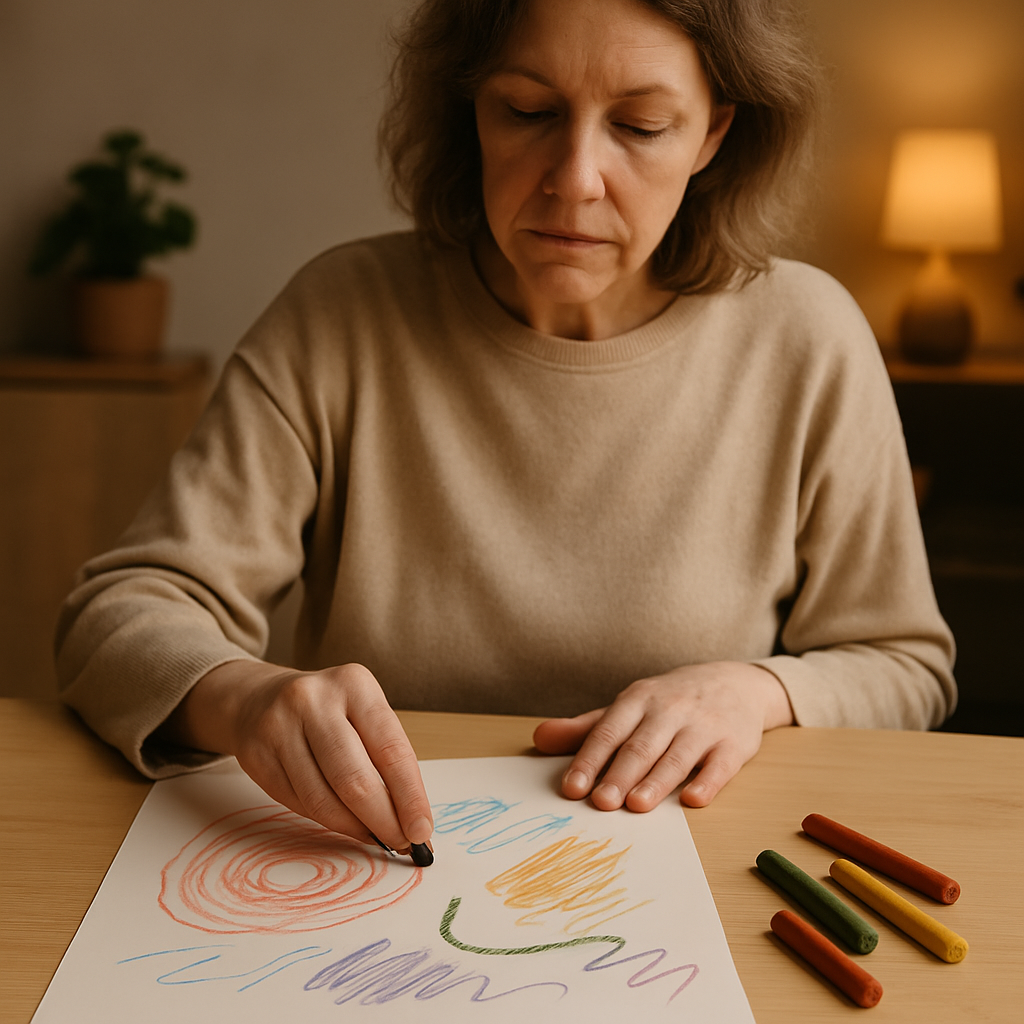
Frame the activity as emotional exploration rather than art creation, explaining that the goal is feeling release, not aesthetic achievement.
Start with simple mark-making exercises using the client’s non-dominant hand to bypass perfectionism and engage the brain’s emotional processing centers.
Offer material choices between 2-3 options, allowing client control while maintaining therapeutic structure and reducing decision overwhelm.
Model vulnerability by acknowledging your own relationship with creative expression, normalizing the discomfort many adults feel when approaching art materials.
Begin with scribbling or color response exercises tied to current emotional states rather than representational drawing that triggers performance anxiety.
Position yourself as curious about their emotional experience during the process, not evaluating the visual outcome.
Clinical reports show 85% client acceptance when art is introduced as ‘exploring feelings’ rather than ‘making art.’ The language shift removes performance pressure and connects directly to therapeutic goals.
Address common objections by acknowledging them directly. When clients say “I’m not artistic,” respond with “This isn’t about being artistic. It’s about giving your feelings a way out.” For “I don’t know what to draw,” offer “Your hands know what to do even when your mind doesn’t.”
The therapeutic relationship determines success more than artistic skill. Clients who trust their therapist will engage with creative expression when it’s presented as another tool for emotional processing rather than a test of artistic ability. Your comfort with the process directly influences their willingness to engage.
What Art Supplies Actually Work in Clinical Settings?

Washable markers and oil pastels: These materials flow easily and create immediate color saturation, supporting emotional expression while containing mess concerns in office settings.
11×14 inch mixed media paper: Large enough for full arm movement and emotional release, small enough to complete in session, with surface texture that accepts multiple materials.
Watercolor pencils and small water containers: Offer control for anxious clients while allowing color blending that mirrors emotional fluidity, with minimal setup and cleanup requirements.
Soft charcoal sticks and kneaded erasers: Support both mark-making and mark-removal, creating metaphors for emotional processing while accommodating different pressure and texture preferences.
Small canvases (8×10) and acrylic paint: For clients ready for more substantial creation, acrylics dry permanently and create lasting artifacts of emotional work.
Washable markers and oil pastels show highest client engagement rates according to therapeutic art facilitation studies. These materials respond immediately to emotional pressure and movement without requiring technical skill.
Safety considerations include non-toxic materials only, avoiding sharp tools like craft knives, and ensuring easy cleanup for clients who become overwhelmed mid-session. Store supplies in clear containers so clients can see options without feeling overwhelmed by choices.
Materials that support emotional processing include those that respond to pressure changes, blend easily, and create immediate visual feedback. Avoid materials requiring extensive technique instruction, as this shifts focus from emotional expression to skill acquisition.
How Do You Hold Space When Strong Emotions Surface During Art?

Explore Avigail Sapir’s 7 week Soul Journey spiritual painting course for creative expression
Emotional containment during creative expression requires recognizing the difference between healthy emotional release and potential retraumatization. Therapists contain emotional overwhelm by maintaining therapeutic presence while allowing the creative process to support natural emotional regulation.
Watch for signs that indicate client overwhelm: dissociation symptoms like blank staring lasting more than 30 seconds, sudden cessation of movement followed by rigidity, or verbal responses that don’t match the current moment. Physical indicators include rapid breathing patterns, visible trembling, or complete withdrawal from art materials. Trauma-informed care protocols recommend stopping creative expression if client shows dissociative symptoms lasting more than 2 minutes.
When overwhelm emerges, pause the creative process and return to grounding techniques within your clinical training. Guide the client back to present-moment awareness through breathing, body awareness, or environmental orientation. The art materials remain available but inactive until the client demonstrates emotional regulation.
Maintain therapeutic relationship by staying calm and present during intense emotional processing. Your nervous system regulation directly influences the client’s ability to stay within their window of tolerance. Avoid rushing to interpret or make meaning from the emotional experience while it’s still active.
Great therapists know that creative expression can access emotions faster than verbal processing allows integration. The goal is supporting emotional release at a pace the client’s system can handle, not pushing through resistance or encouraging cathartic breakthroughs that overwhelm their capacity.
When Should You Refer Clients to Actual Art Therapy?

Specific clinical situations require art therapy referral when visual analysis becomes necessary for accurate assessment or when artistic content reveals psychological patterns beyond your scope of practice. Licensed therapists should refer when clients consistently create artwork with concerning symbolic themes that require interpretation for treatment planning.
Art therapy referral becomes appropriate when clients demonstrate strong artistic skills coupled with complex psychological presentations where their visual expression contains more clinical information than their verbal processing. American Art Therapy Association reports average 3-month wait times for credentialed art therapists in urban areas, making early identification of referral needs important for treatment continuity.
Frame referral to clients as expanding their therapeutic team rather than transferring care. Explain that art therapists have specialized training in understanding how psychological states appear in visual creation, offering assessment tools unavailable in traditional therapy. Most clients accept referral when it’s positioned as accessing additional expertise rather than correcting therapeutic mistakes.
Maintain therapeutic relationship during transition by continuing verbal therapy while the client engages with art therapy services. Many clients benefit from integrated treatment where talk therapy provides emotional stability while art therapy offers specialized creative processing. Clear communication between providers prevents therapeutic splitting and ensures coordinated care.
Trust your clinical judgment about when creative expression moves beyond supportive intervention into territory requiring specialized interpretation. When in doubt, consult with local art therapists about specific cases while maintaining client confidentiality.
Frequently Asked Questions
Can I use art in counseling sessions if I’m not an art therapist?
Licensed therapists can facilitate therapeutic art activities within their scope of practice by focusing on emotional expression rather than artistic interpretation. You cannot provide art therapy, which requires specific graduate training and credentialing through the Art Therapy Credentials Board. Stay within your competency by guiding the creative process while using your existing clinical skills for assessment and intervention.
What’s the difference between using art expressively versus therapeutically?
Expressive art focuses on the creative process and emotional release that happens during mark-making, while therapeutic art interpretation requires art therapy training to analyze visual content for psychological meaning. Licensed therapists can guide expressive creation and process the emotions that surface, but should avoid analyzing artistic symbols without proper credentials.
How do I know if a client is getting overwhelmed during an art activity?
Watch for dissociation signs like blank staring, sudden stillness, or disconnected responses lasting over 2 minutes. Physical indicators include rapid breathing, trembling, or complete withdrawal from materials. When overwhelm appears, pause the creative process and return to grounding techniques within your clinical training before continuing.
Do I need special training to use creative expression with therapy clients?
While formal art therapy training isn’t required, continuing education in expressive arts or therapeutic art facilitation helps ensure safe practice and expands your intervention toolkit. Consult your licensing board about specific requirements in your state, as some boards mandate additional training for using creative techniques in clinical practice.
Leave a Reply