
How to run a painting circle asks you to step into sacred leadership, the art of creating containers where women feel safe enough to paint their truth.
Key Takeaways:
- Opening ritual sets the container: 8 minutes of guided meditation and intention-setting creates psychological safety for the 90-minute session ahead
- Group witnessing protocol: Each woman shares her process for exactly 3 minutes without feedback, creating deep connection without amateur therapy dynamics
- Practical structure: 6-8 women maximum, 2.5-hour sessions, and pre-session supply coordination prevents overwhelm and ensures creative flow
What Makes a Painting Circle Different from a Regular Art Class?
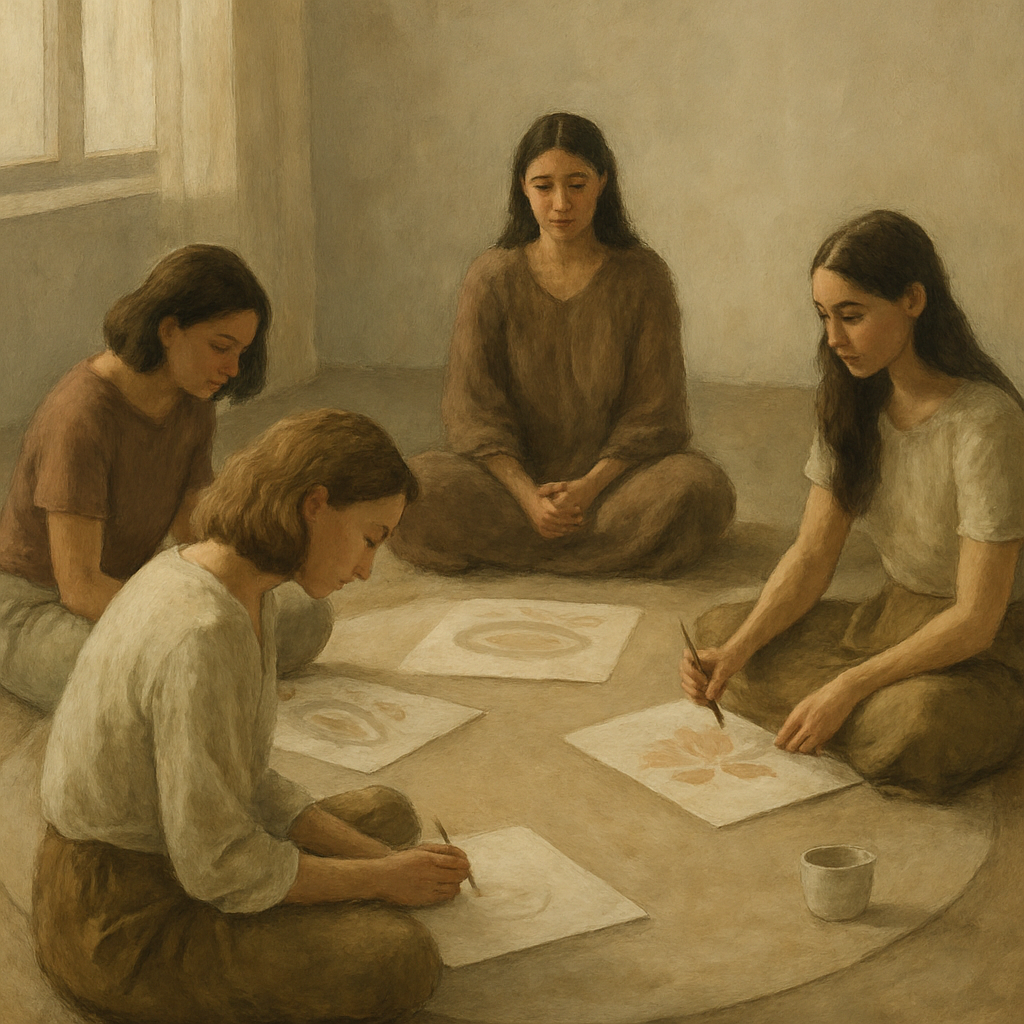
A painting circle is a facilitated gathering where women create art together within a sacred container designed for witnessing and transformation. This means the focus shifts from learning technique to experiencing presence, both with the paint and with each other.
Unlike traditional art classes that center skill development through instruction and critique, painting circles center the soul-led creative process. The facilitator holds space rather than teaches technique. Each woman follows her own intuitive painting journey while being witnessed by the group. No one receives feedback on their artwork or direction on how to “improve” their painting.
The witnessing element sets painting circles apart from any other creative gathering. Women share their process, what arose during painting, what they discovered, what felt challenging, without receiving advice or analysis. This creates community creative leadership where each participant becomes both creator and witness.
Based on testimonials from 50+ painting circle experiences, women consistently report feeling “held” and “seen” in ways that transform their relationship to both art-making and themselves. The transformative art practice emerges not from individual effort but from the group container where vulnerability becomes creative fuel.
Women need this container because creative expression has been socialized out of most of us. Painting circles restore permission to make marks without purpose, to feel without fixing, to create without performing.
How Do You Create Sacred Container Through Opening Ritual?
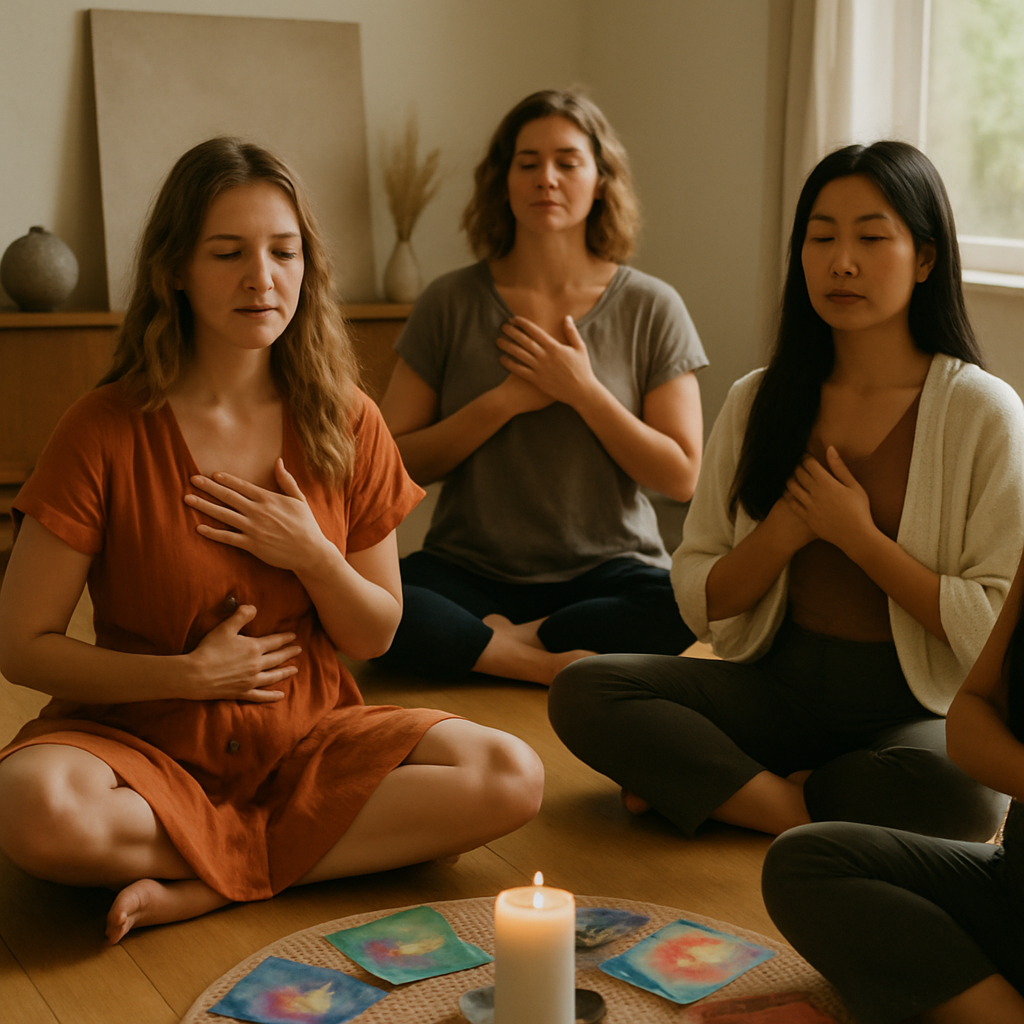
Opening ritual establishes kavanah (directed intention) and transforms ordinary time into sacred creative space. Based on Jewish contemplative tradition, the 8-minute opening structure guides participants from scattered attention into focused presence.
-
Begin with breath awareness, Guide the group through three conscious breaths together, eyes closed, feeling their bodies in their chairs and their connection to the room.
-
Set group kavanah, Invite each woman to silently name her intention for the session, what she wants to explore or release through painting.
-
Establish the container, Speak aloud the agreements: we witness without fixing, we share without explaining ourselves, we create without judgment of the outcome.
-
Call in presence, Close with 60 seconds of shared silence, hands on heart, inviting each woman to arrive inside herself and with the group.
-
Transition to materials, Open eyes and move to painting supplies with the ritual atmosphere intact.
Some women resist ritual, especially if they come from religious trauma or skeptical backgrounds. Handle this by explaining ritual as simply “how we start together” rather than requiring spiritual language or beliefs. The structure creates safety even for those uncomfortable with the sacred framing.
The opening prevents art facilitation chaos, women diving into painting before they feel grounded or connected. Those eight minutes create the psychological container that allows creative risk-taking during the painting portion.
What Supplies and Space Setup Actually Support Group Flow?
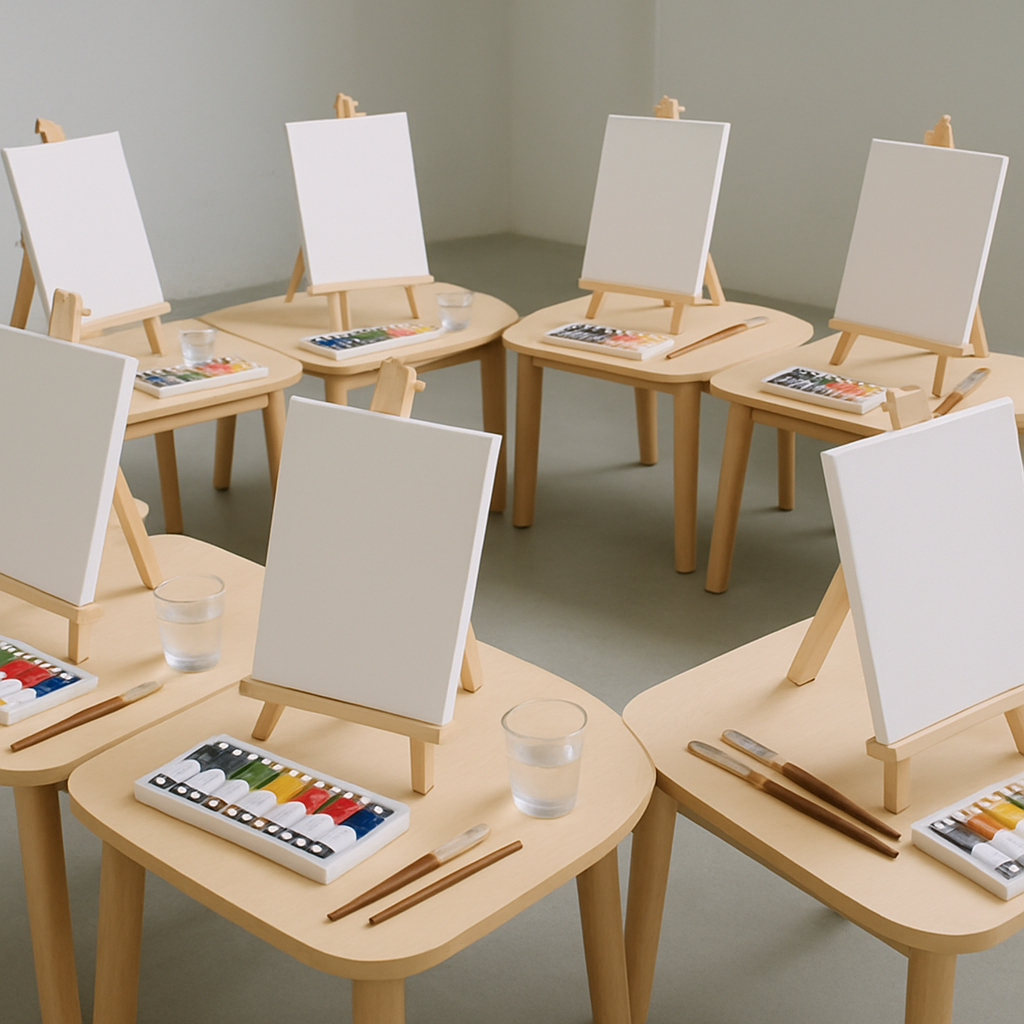
Proper setup prevents creative and logistical overwhelm that destroys the sacred container you worked to establish. Organization serves the soul work.
| Feature | Supply Option | Facilitation Benefit |
|---|---|---|
| Paint | Individual acrylic sets (6 colors max) | Prevents mixing confusion and encourages color limitations |
| Brushes | 3 brushes per person (small, medium, large flat) | Simple tool set keeps focus on expression not technique |
| Paper | 11″x14″ watercolor paper, pre-cut | Large enough for expression, small enough to complete in session |
| Water | 2 jars per person (clean and dirty) | Maintains paint clarity throughout 90-minute painting time |
| Workspace | 4×6 foot tables for 2 women each | Enough space to spread materials without crowding neighbors |
Space requirements matter more than most facilitators realize. Each woman needs arm-span room around her chair, cramped conditions shut down creative risk. Natural light or full-spectrum bulbs prevent color distortion and eye strain during detailed work.
Seating arrangement should allow eye contact across the circle but enough distance that women don’t feel observed while painting. Avoid classroom-style rows that prevent group connection.
Cleanup strategy prevents session-end chaos: assign each woman responsibility for her own materials plus one shared supply area. This maintains the contemplative atmosphere through completion.
Pre-session coordination means emailing supply lists and arrival instructions three days before. Maximum 6-8 participants ensures you can attend to individual needs while maintaining group flow.
How Do You Hold Space When Strong Emotions Surface?
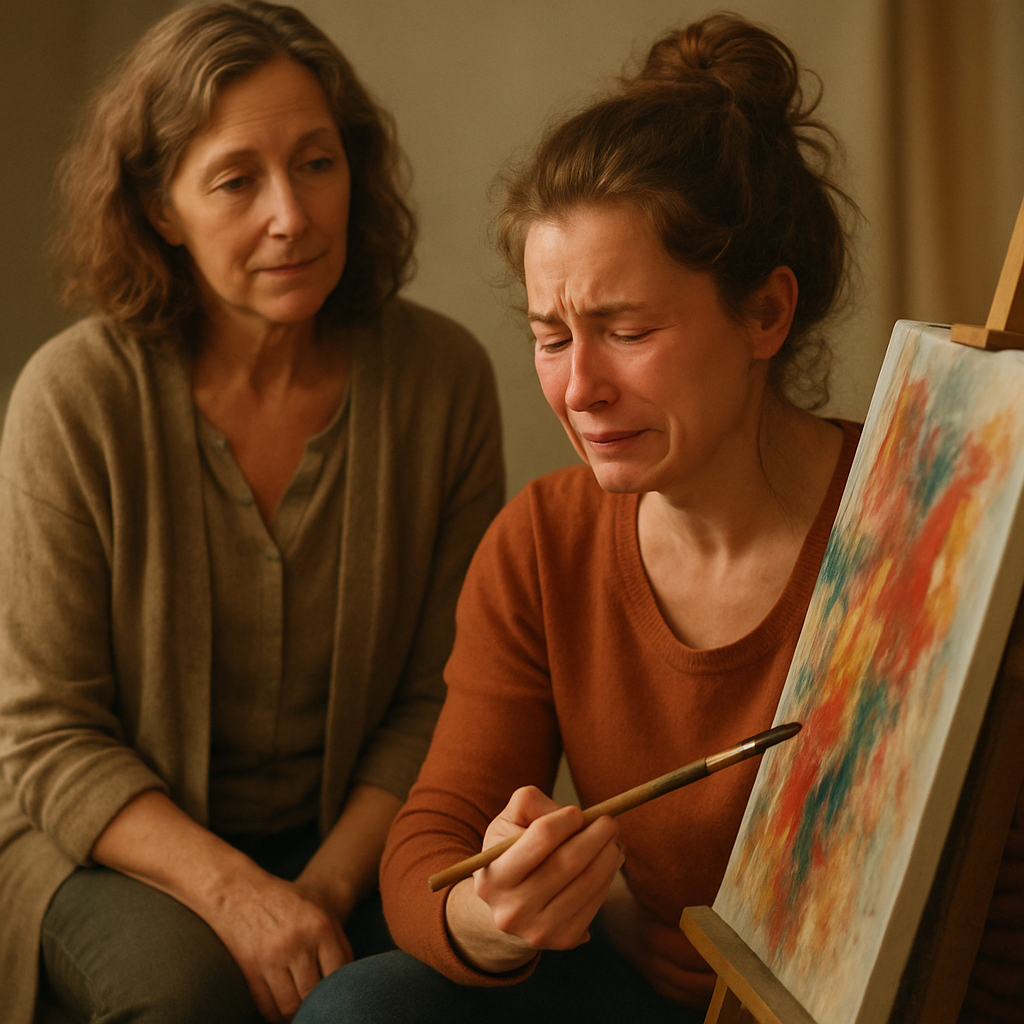
Skilled facilitation contains emotional processing without crossing into therapy territory. You witness what arises without trying to heal or fix what emerges during creative expression.
Emotional release occurs in approximately 30% of painting circle sessions, tears, anger, joy, or grief flowing through the paintbrush onto paper. Your role involves holding steady presence while the woman experiences her process. Stay seated, maintain eye contact if she seeks it, and avoid moving toward her or offering physical comfort unless explicitly requested.
The difference between holding space and providing therapy lies in your response to what emerges. Therapists interpret, analyze, and guide emotional processing. Facilitators witness without interpretation. When someone shares difficult emotions, reflect back what you heard: “I hear you saying the red paint brought up anger about your divorce.” Stop there. No analysis of why or suggestions for what to do next.
Boundaries around trauma processing protect both the individual and group safety. If someone begins trauma processing, detailed stories about abuse, violence, or severe mental health crises, gently redirect: “This sounds important and big. Let’s connect after our session about resources that might serve this process.”
Stay in your lane means knowing when to refer to professionals. Creative healing can open doors but cannot provide clinical treatment. Have local therapist referrals ready before you begin facilitating.
When emotions surface, the group often wants to rescue or advice-give. Remind everyone that witnessing without fixing serves the person processing more than trying to make them feel better.
What Does the Group Witnessing Process Look Like?
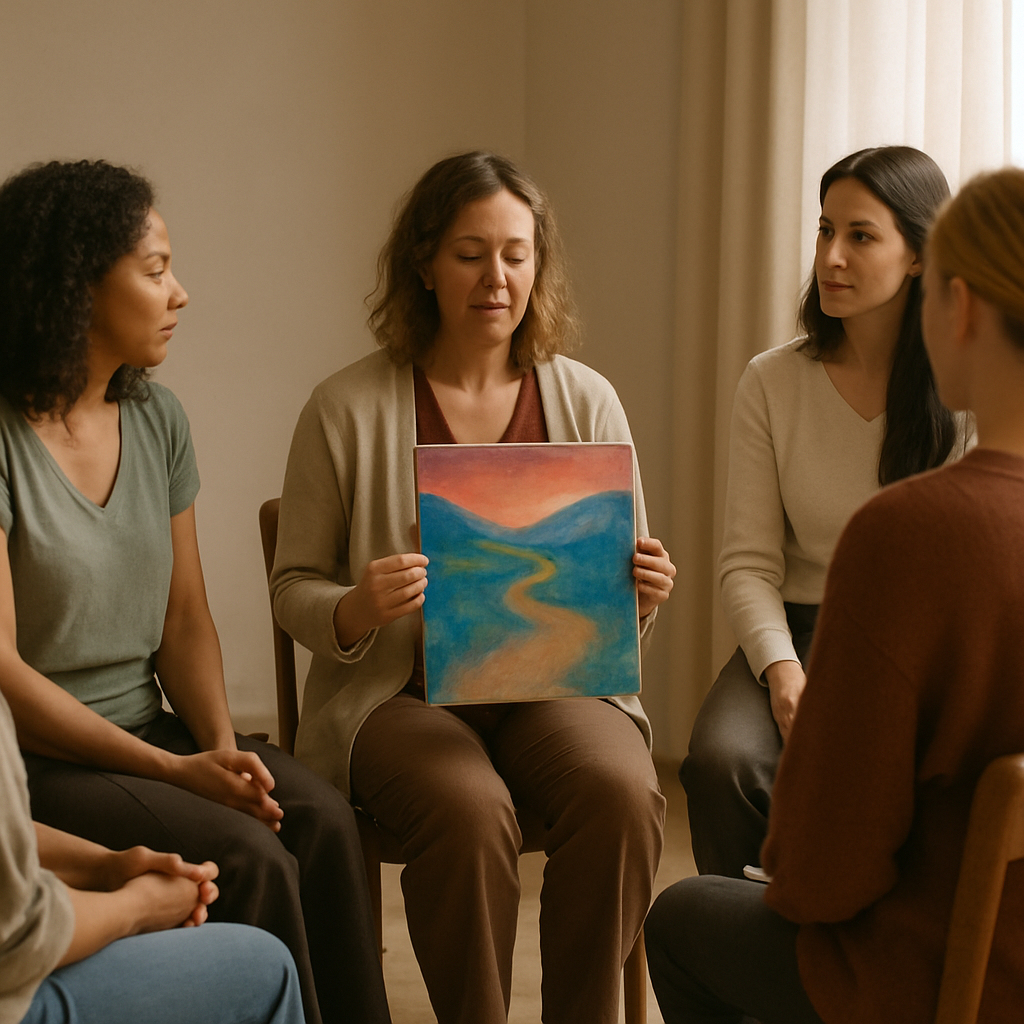
Structured witnessing creates deep connection without advice-giving or amateur therapy dynamics. The protocol protects both sharers and listeners from overwhelming emotional territory.
-
Set the timing boundary, Each woman receives exactly 3 minutes to share about her painting process, tracked by you with a gentle timer notification.
-
Frame the witnessing, “Share what arose during your painting time, what you noticed, what surprised you, what felt challenging, without explaining or defending your artwork.”
-
Enforce the no-feedback rule, After each share, the group responds with only “thank you”, no questions, analysis, suggestions, or commentary about the painting or process.
-
Handle advice-givers, When someone breaks the no-feedback rule (this happens frequently), gently interrupt: “Let’s just receive Sarah’s share without response” and move to the next person.
-
Create safety for vulnerability, Model appropriate sharing yourself first, demonstrating the difference between process sharing and trauma processing.
-
Close the circle, End with 30 seconds of silent appreciation for what the group witnessed together.
Three minutes per person prevents overwhelm and ensures equal time in groups up to 8 women. Longer sharing creates therapy-group dynamics that exceed most facilitators’ training.
Witnessing without fixing requires practice for participants conditioned to offer solutions. Some women will struggle with the no-advice rule, especially helping professionals. Hold this boundary firmly, it protects the sacred container you created.
When vulnerability emerges during witnessing, resist the urge to comfort or counsel. Your steady presence and the group’s witnessed attention provide the healing, not your words.
When Are You Ready to Lead vs. When Should You Seek Mentorship?
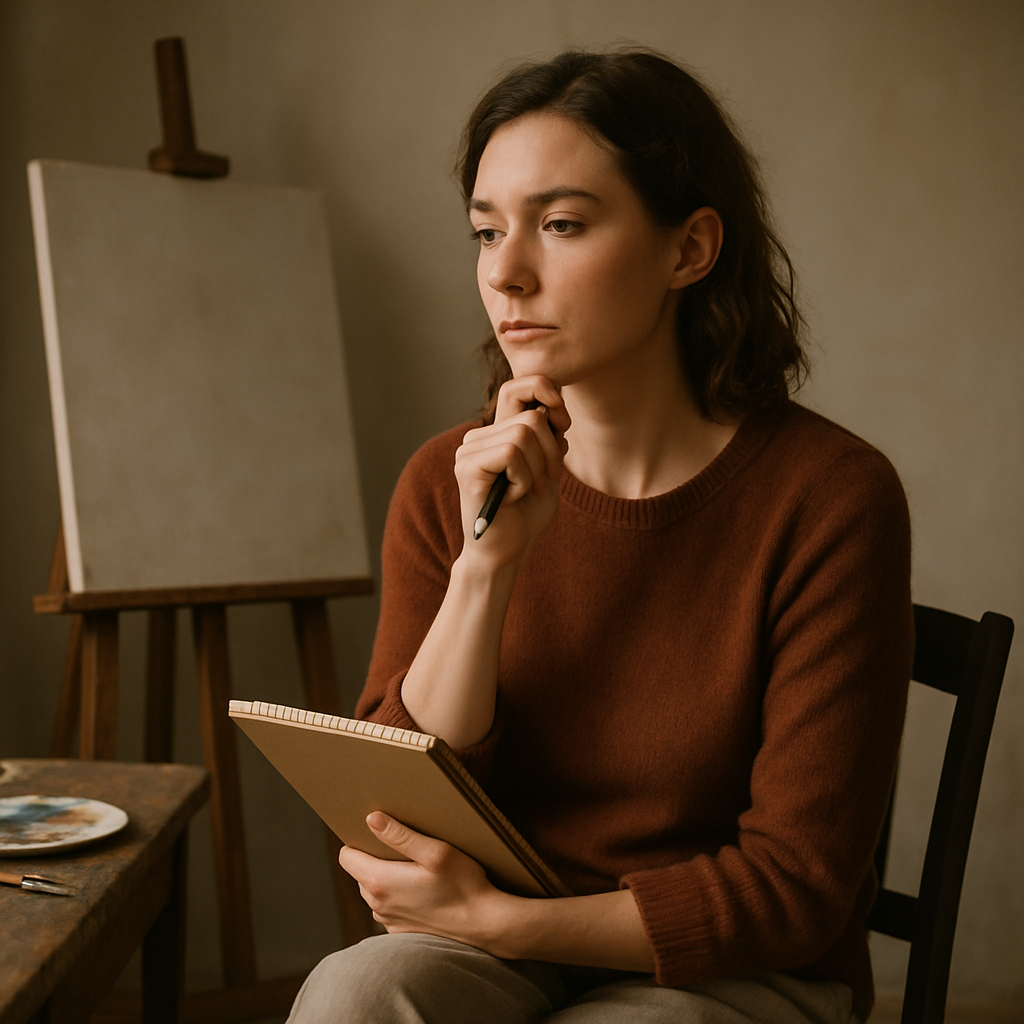
Facilitation readiness requires specific skills and boundaries beyond enthusiasm for creative expression. Self-assessment prevents overwhelming yourself and potentially harming participants.
| Readiness Factor | Ready to Lead Solo | Needs Mentorship First |
|---|---|---|
| Personal Practice | 6+ months regular painting | Sporadic or new practice |
| Emotional Regulation | Comfortable with others’ emotions | Overwhelmed by others’ tears |
| Boundary Setting | Can say no and hold limits | People-pleasing tendencies |
| Group Experience | Led other groups successfully | Prefers one-on-one interactions |
| Crisis Response | Knows when to refer to professionals | Wants to heal everyone yourself |
Red flags that indicate need for training include: wanting to use art to heal your own trauma through leading others, feeling responsible for participants’ emotional outcomes, or lacking experience with group dynamics. Excitement about transformation doesn’t qualify you to hold space for others’ transformative art practice.
Most effective facilitators complete 6 months of their own painting practice before leading others. You cannot facilitate what you haven’t experienced. Your personal creative healing becomes the foundation for witnessing others’ processes without projecting your own needs onto their experience.
The difference between enthusiasm and skill shows up when challenges arise, someone has a breakdown, group members conflict, or your own emotional reactions get triggered during facilitation. Skill means maintaining container stability when chaos emerges.
Mentorship options for developing facilitators provide supervised practice with experienced leaders who can guide your development. Many painting circle leaders begin by co-facilitating with experienced mentors before leading solo groups.
Frequently Asked Questions
How many people should be in a painting circle?
The optimal size is 6-8 women maximum. This allows each person 3 minutes for sharing during the witnessing portion while keeping the total session under 2.5 hours. Larger groups prevent the intimacy needed for transformation.
Do I need art training to facilitate a painting circle?
You don’t need formal art education, but you do need your own established painting practice and understanding of group dynamics. Most effective facilitators paint regularly for at least 6 months before leading others and often seek mentorship for the group leadership skills.
What’s the difference between facilitating and teaching in a painting circle?
Facilitating focuses on holding sacred space for each woman’s process, while teaching focuses on skill development. In painting circles, you guide the container and witness the group without giving artistic instruction or critique.
Leave a Reply