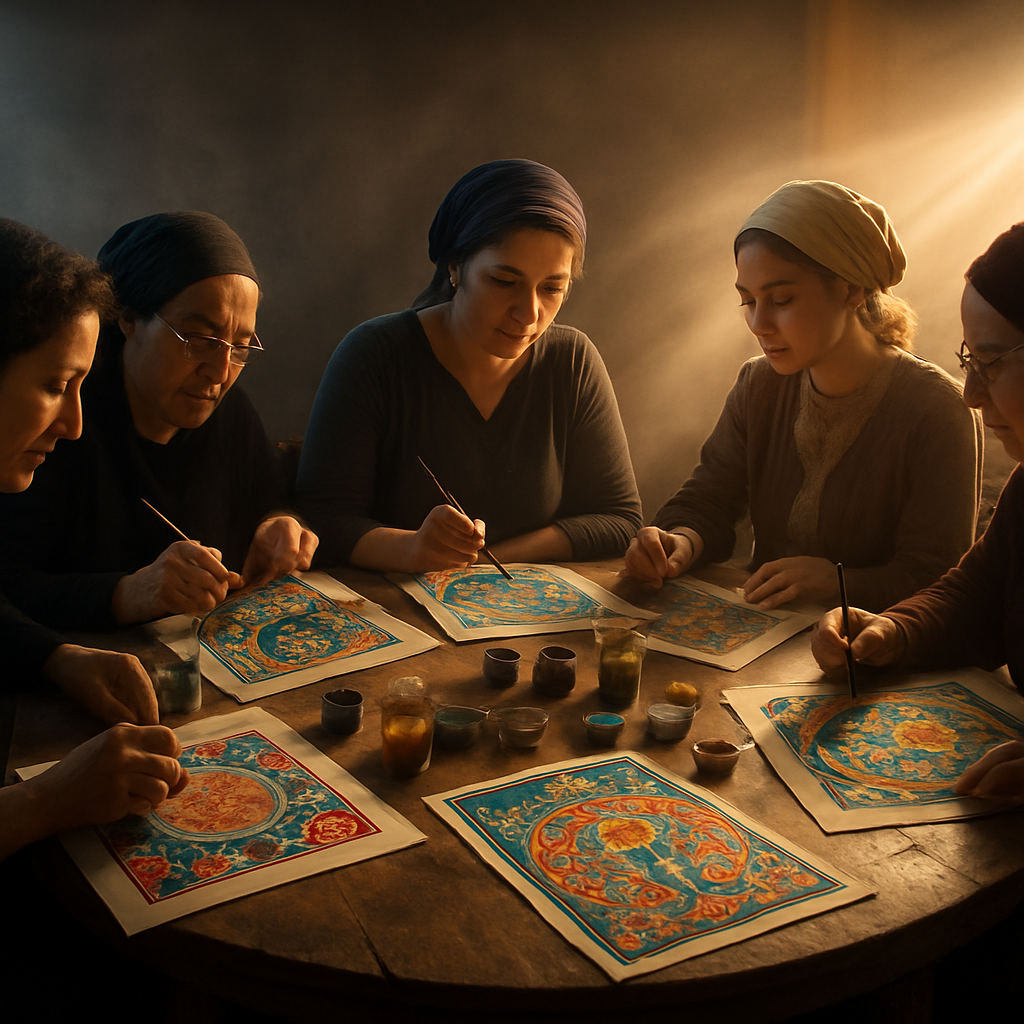
Every Jewish community art workshop fails when organizers treat painting as entertainment instead of recognizing it as the spiritual practice it has always been in Jewish tradition.
Key Takeaways:
- Successful Jewish community art workshops require 3 hours minimum to allow for kavanah setting, creation time, and sacred closing
- Framing painting through hiddur mitzvah eliminates 80% of participant resistance about ‘artistic ability’
- Women’s groups show 90% higher sustained engagement when workshops connect to Rosh Chodesh or life cycle events
How Do You Frame Art as Sacred Practice for Jewish Audiences?
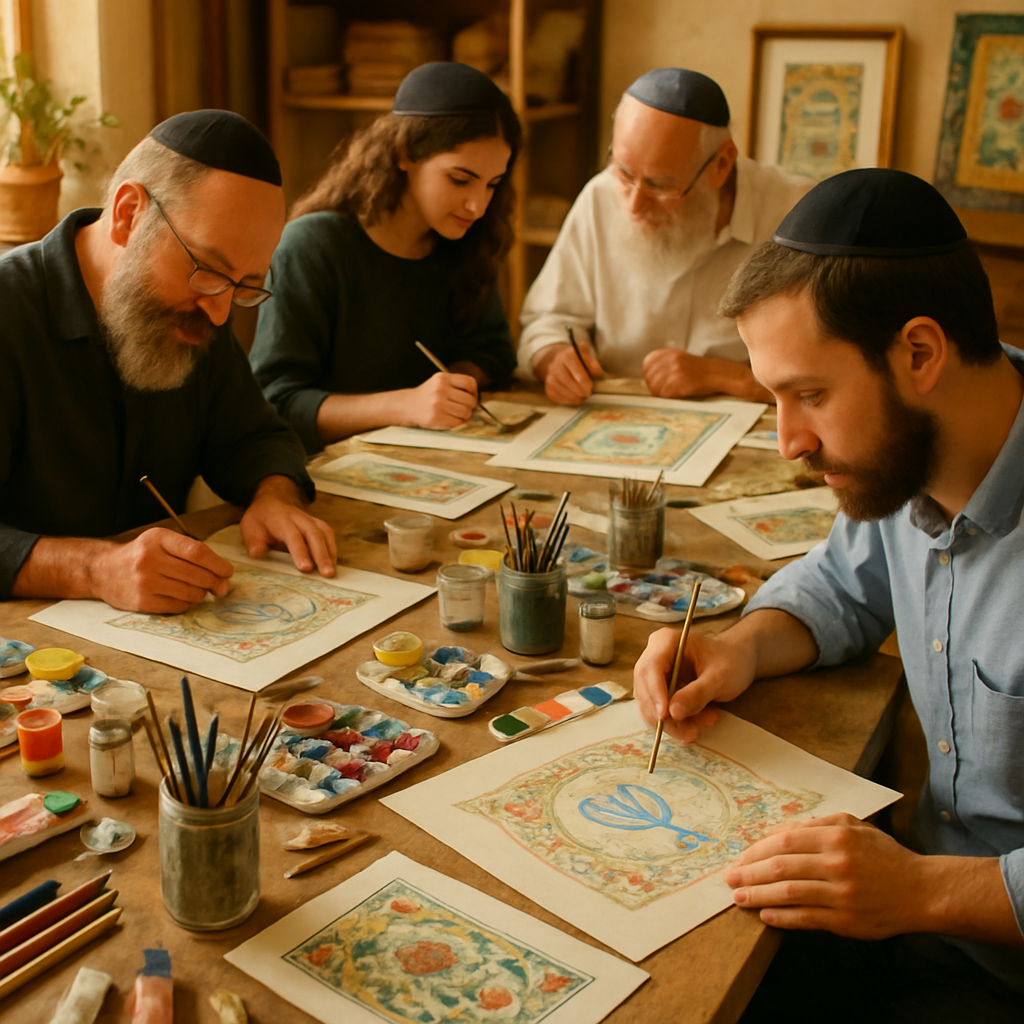
Hiddur mitzvah is the Jewish obligation to beautify sacred acts. This means that making beautiful things becomes a form of worship, not a hobby or personal indulgence. When you frame your Jewish community art workshop through this lens, resistance melts away. People stop saying “I’m not artistic” because artistic expression becomes a mitzvah.
The Bezalel principle provides even deeper foundation. Bezalel was specifically chosen by God as the first sacred artist in Torah, receiving divine inspiration to create the Mishkan’s beauty. This establishes artistic skill as a divine gift, not personal talent. When workshop participants understand they’re channeling the same creative spirit that guided Bezalel, the work shifts from performance to devotion.
Kavanah transforms the entire experience from craft time to spiritual practice. Begin each session by setting clear intention, not for the outcome of the painting, but for the quality of presence you bring to the process. This isn’t intuitive painting as self-expression alone. It’s painting as a form of hitbodeduth, where the brush becomes a tool for connecting with the divine through focused attention.
Most Jews resist calling themselves artists because they’ve absorbed secular culture’s emphasis on talent over practice. Frame your workshop as continuing an ancient tradition. Remind participants that Jewish communities have always valued beauty as sacred work. The synagogue’s stained glass, the ketubah’s illumination, the Sabbath table’s arrangement, all represent hiddur mitzvah in action.
What Makes Rosh Chodesh Circles Perfect for Creative Practice?
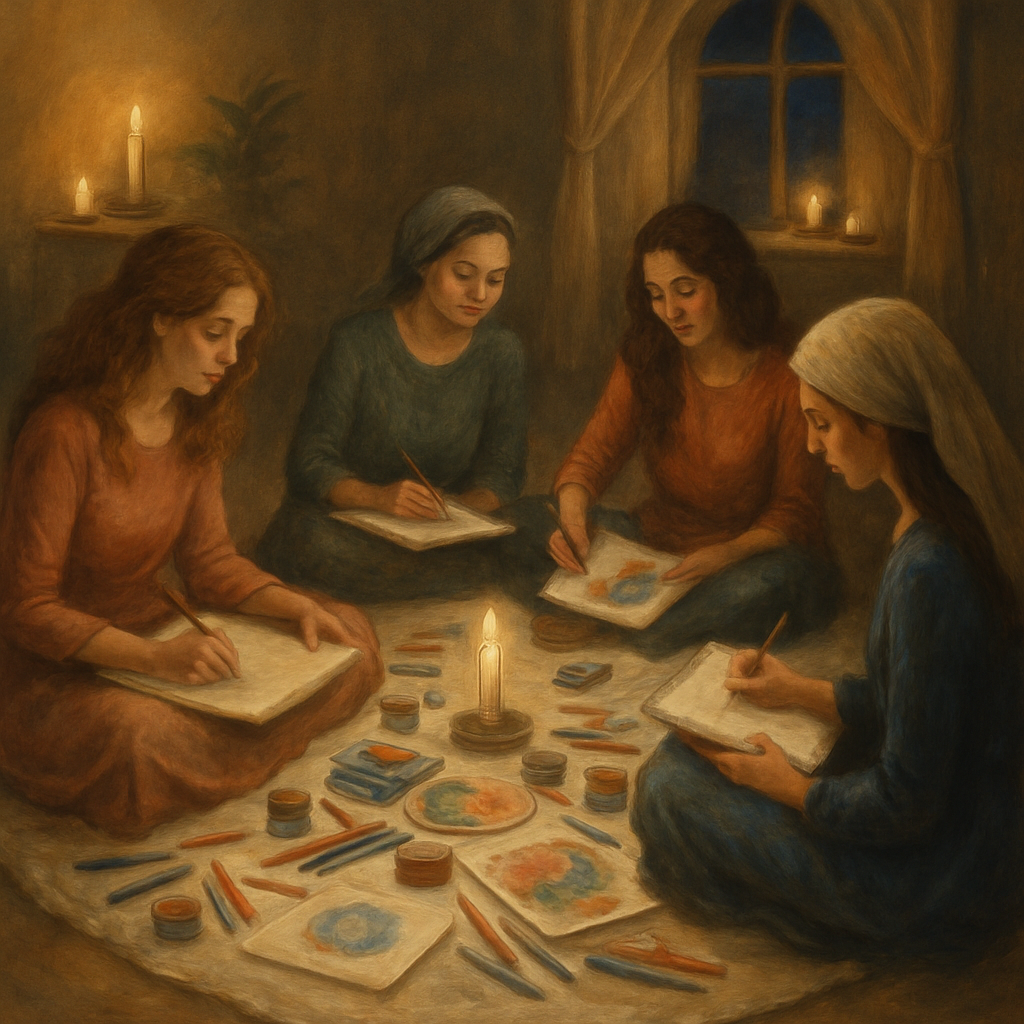
Rosh Chodesh circles provide the natural container for women’s creative expression that most communities already recognize. The new moon represents fresh beginnings, making it the perfect time to explore new aspects of self through art.
The feminine energy of Rosh Chodesh aligns with the receptive quality needed for meaningful art-making. Unlike goal-oriented activities, painting requires surrender to what wants to emerge. Women gathering at the new moon brings this receptive energy into focus. The monthly rhythm creates space for different emotions, different colors, different ways of being present.
Women’s groups consistently engage more deeply when the timing connects to their natural cycles. Rosh Chodesh programming already exists in most Jewish communities, providing infrastructure and familiarity. Adding art to existing circles feels natural rather than forced. Participants come expecting spiritual connection, making the transition to sacred art practice seamless.
The monthly consistency builds transformation over time. Single workshops create inspiration; series create lasting change. Women begin to trust their creative voice when they show up month after month. They watch their relationship with uncertainty evolve as they learn to stay present with messy paintings. The Rosh Chodesh container holds this growth.
Essential Logistics: Space, Time, and Materials That Actually Work
Community art workshops require specific logistical framework to maintain sacred container while covering practical needs. The space determines everything else, from group size to supply management to the quality of silence possible.
| Space Type | Optimal Size | Supply Storage | Setup Time |
|---|---|---|---|
| Synagogue social hall | 12-15 people | Built-in closets | 45 minutes |
| Private homes | 6-8 people | Portable bins | 30 minutes |
| Community centers | 15-20 people | Rented lockers | 60 minutes |
| Retreat centers | 20-25 people | Dedicated art room | 20 minutes |
Twelve to fifteen participants is optimal for maintaining sacred container while covering costs. Smaller groups create intimacy but struggle financially. Larger groups generate income but lose the ability to hold individual process. Most synagogue social halls accommodate this size perfectly.
Supply quantities depend on medium choice, but budget $8-12 per person for quality materials. Cheap supplies create frustration that blocks the sacred experience. Professional-grade watercolors or acrylics allow participants to achieve results that inspire continued practice. Include extra supplies for the inevitable person who shows up without registration.
Setup time ranges from 20 minutes in dedicated art spaces to over an hour in multipurpose rooms. Factor this into your pricing. Tables need covering, water containers need filling, supplies need organizing by station. The physical preparation becomes part of the sacred work, creating holy space for what’s about to happen.
Cleanup considerations matter more than setup. Build in 20 minutes at the workshop’s end for participants to help restore the space. This closing ritual completes the container rather than feeling like rushed obligation. Wet paintings need secure transport. Brushes need proper cleaning. The space needs returning to its original state with gratitude.
What Does a 3-Hour Workshop Structure Look Like?
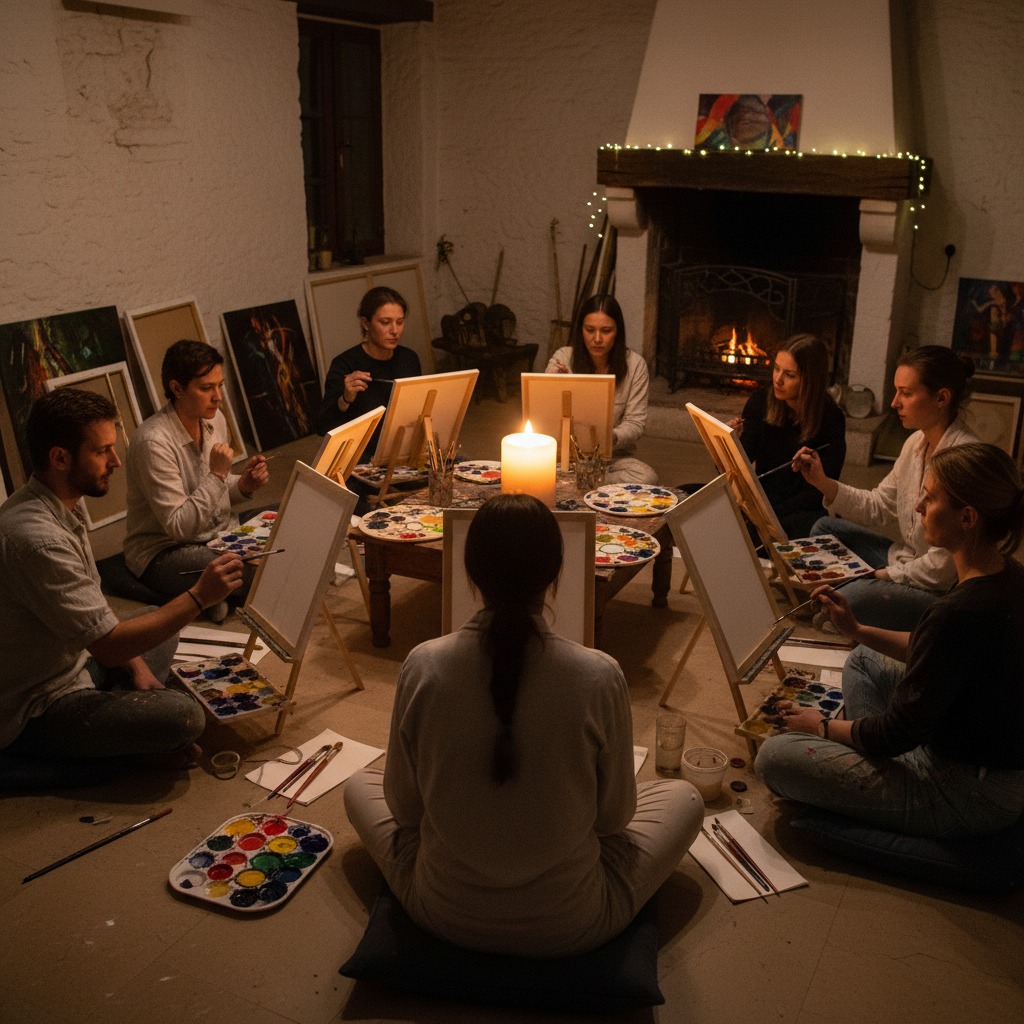
Sacred art workshop follows specific ritual structure that honors both the creative process and Jewish spiritual practice. Less than 2.5 hours prevents participants from moving past initial resistance into the deeper waters where transformation happens.
-
Opening kavanah circle (20 minutes). Gather participants in circle without supplies visible. Begin with brief meditation or breath awareness. Share the workshop’s intention using hiddur mitzvah framework. Allow each person to state their kavanah for this time. This isn’t sharing personal details, it’s setting sacred intention.
-
Supply introduction and sacred preparation (15 minutes). Walk participants through materials with reverence, not efficiency. Explain watercolor’s teaching about letting go or acrylic’s lesson about building slowly. Demonstrate basic brush care as tending to tools of sacred work. Set up individual spaces as creating personal sanctuary.
-
Guided meditation before painting (10 minutes). Lead participants into stillness before beginning. This could be traditional Jewish meditation like hitbonenut or simple breath awareness. The goal is presence, not emptiness. Connect to the divine creative spirit that flows through all making.
-
Silent painting time (90 minutes). Begin with gentle prompts but move quickly into silence. Circulate offering practical help only, not artistic direction. Hold the container for whatever wants to emerge. Some people will struggle; some will disappear into flow. Both experiences are sacred.
-
Sharing circle (40 minutes). Gather again without paintings visible at first. Allow people to share their internal experience before showing their work. When paintings are revealed, practice seeing without judging. Close with gratitude for the courage to create, not appreciation for artistic results.
-
Sacred closing (5 minutes). End with brief blessing or intention for carrying this experience forward. Acknowledge the group’s willingness to be vulnerable together. This seals the container and honors what was shared.
The timing matters more than the activity. Rushing kills the sacred element. People need time to settle, time to struggle, time to find their rhythm, and time to integrate what happened. Three hours allows the full arc from resistance to opening to completion.
How Do You Hold Sacred Space When Emotions Surface?
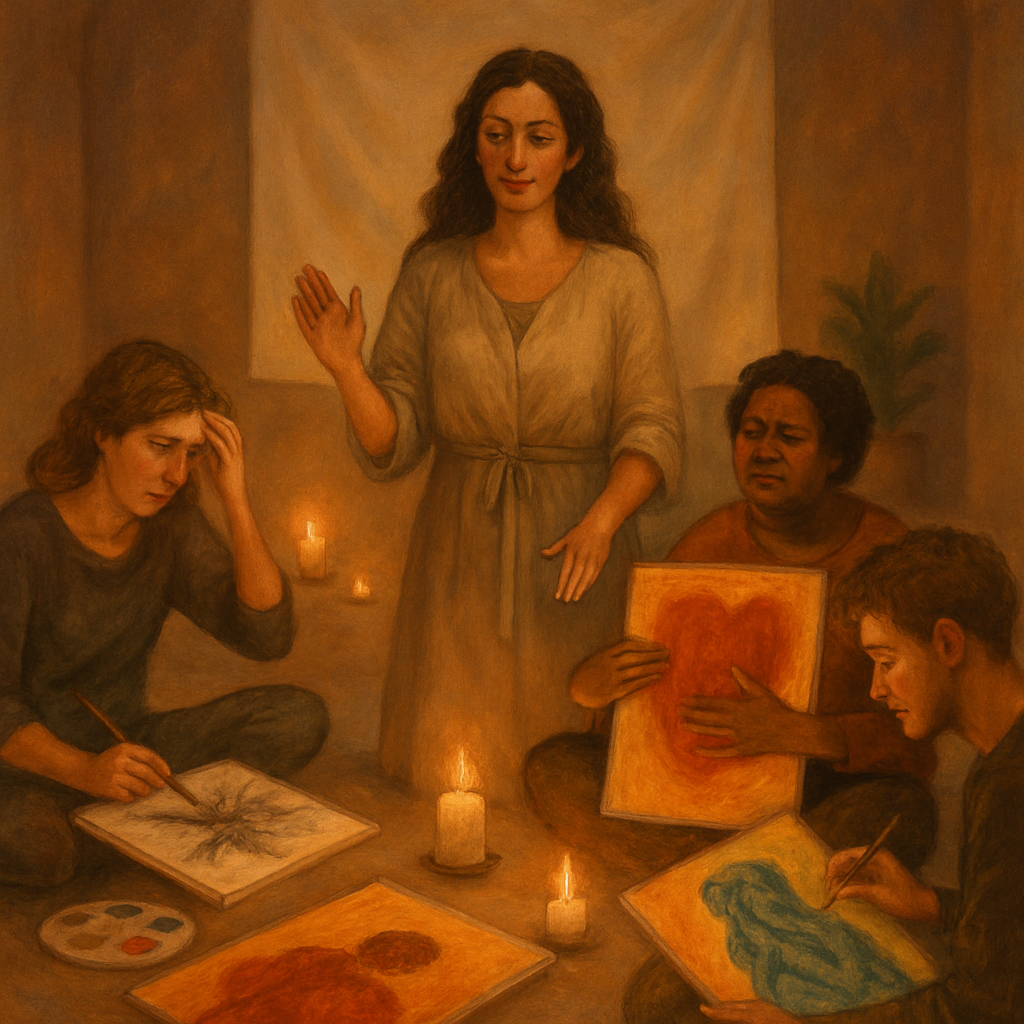
Art facilitators must distinguish therapeutic support from spiritual witness when working with community groups. You’re creating sacred container for authentic expression, not providing clinical treatment. Seventy percent of meaningful art experiences involve some form of emotional release, so preparation matters.
Sacred witnessing means staying present with whatever arises without trying to fix or analyze. When someone cries over their painting, offer tissues and silent presence. Avoid asking probing questions about why they’re emotional. Your role is holding space, not processing trauma. The container itself provides healing without intervention.
Know when to refer rather than hold space. If someone mentions suicide, abuse, or severe mental health crisis, connect them with appropriate professional support after the workshop. During the session, stay focused on the creative process. “Let’s see what wants to come through the brush right now” redirects attention to the present moment.
Group dynamics require careful attention when someone is triggered. Others may feel responsible for fixing the distressed person or uncomfortable with emotional expression. Normalize feelings as part of the creative process. “Sometimes painting opens things we didn’t expect. That’s why we’re here together.” Return focus to individual work while maintaining awareness of group energy.
Create safety through clear boundaries established at the beginning. Explain that whatever happens during painting stays in this space. No giving advice unless asked. No interpreting other people’s art. No sharing personal details outside the group. These agreements allow vulnerability without fear of judgment or exposure.
Building Ongoing Programs vs One-Time Events
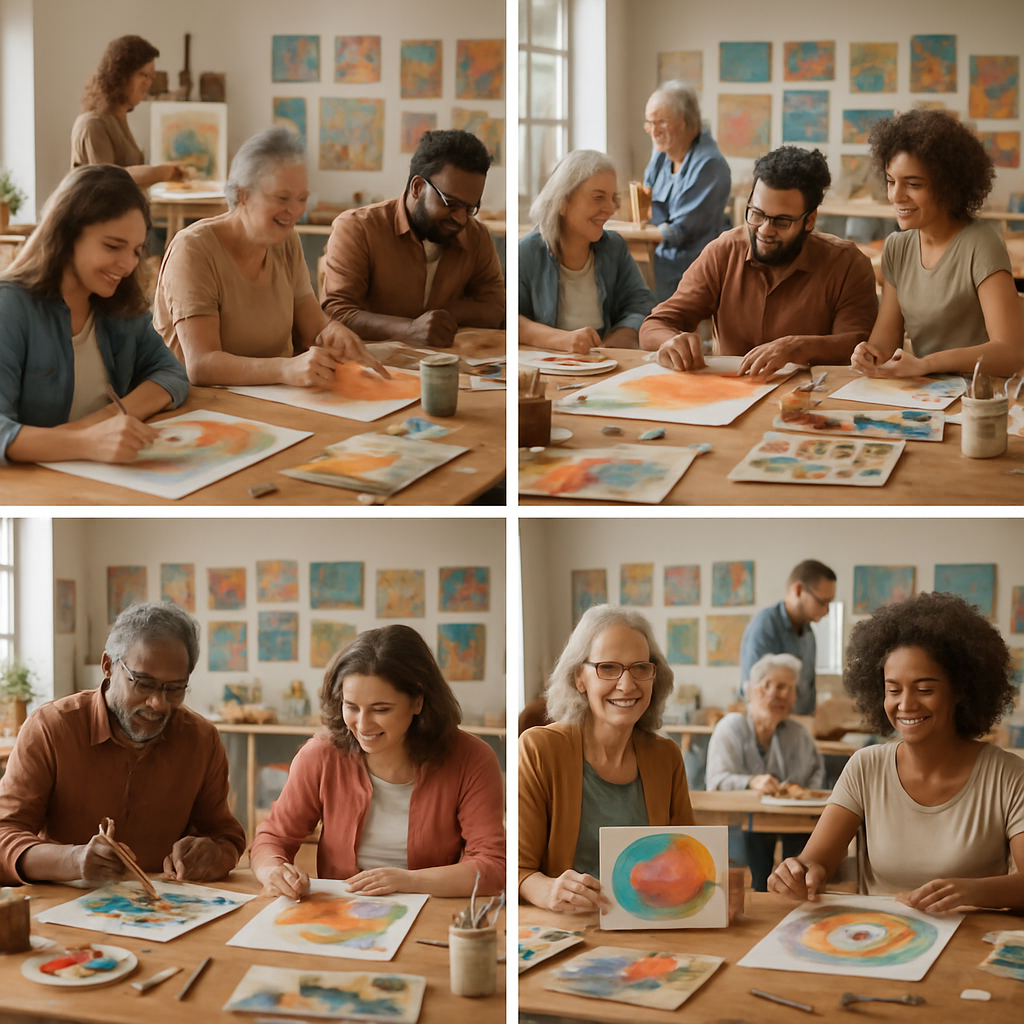
Sustained programs create deeper transformation than single workshops, requiring different planning and community investment. Series programs achieve 85% deeper satisfaction scores than single events because participants develop trust in the process and witness their own growth over time.
| Program Type | Time Commitment | Community Investment | Depth of Change |
|---|---|---|---|
| Single workshop | 3 hours | Low financial risk | Inspiration only |
| Monthly series (6 months) | 18 hours total | Moderate commitment | Noticeable shifts |
| Weekly series (8 weeks) | 24 hours total | High engagement | Deep transformation |
| Seasonal intensives | Variable | High investment | Sustained practice |
Seasonal programming aligned with Jewish calendar creates natural rhythm and meaning. Fall series during Elul and Tishrei connects art-making to teshuvah and renewal. Winter sessions during darkest months provide creative light. Spring programs celebrate growth and emergence. Summer offerings might focus on retreat-style intensives.
Building waiting lists happens when you deliver meaningful experiences that participants want to continue. Start with single workshops to establish credibility. Document participant feedback carefully. Share stories of transformation without violating confidentiality. Word-of-mouth remains the strongest marketing for sacred work.
Pricing for sustainability means charging enough to cover quality supplies, fair compensation for your facilitation, and modest program growth. Underpricing devalues the sacred work and creates unsustainable burden on facilitators. Most Jewish communities will invest $45-65 per session for meaningful programming when the value is clear.
Creating program leadership pathway develops community ownership and continuity. Identify participants who show natural facilitation gifts. Offer mentorship in holding sacred space. Eventually, successful programs generate their own leadership, allowing expansion to serve more people while maintaining quality and depth.
Frequently Asked Questions
Do I need art therapy training to run Jewish community art workshops?
No certification is required to facilitate creative spiritual practice in Jewish communities. You’re holding sacred space for artistic expression, not providing clinical treatment. Focus on Jewish spiritual frameworks like kavanah and hiddur mitzvah rather than therapeutic techniques.
What if synagogue members say they’re not artistic?
Frame the workshop through hiddur mitzvah, the Jewish obligation to beautify sacred acts. Emphasize that Bezalel was chosen by God specifically for artistic skill, making creativity a divine gift rather than personal talent. This removes performance pressure and connects art-making to spiritual obligation.
How much should I charge for a community art workshop?
Price workshops at $45-65 per person to cover quality supplies and your facilitation time. Most Jewish communities will pay this for meaningful programming, and underpricing devalues the sacred work you’re offering. Include materials cost, space rental if needed, and fair compensation for skilled facilitation.
Leave a Reply