
Hitbodeduth Jewish prayer has found its visual expression through the paintbrush, transforming canvas into sacred space and art-making into intimate conversation with God. This practice merges Rebbe Nachman’s revolutionary approach to unscripted personal prayer with soulful art practice, creating a pathway for visual dialogue with the Divine.
Key Takeaways:
- Hitbodeduth is spontaneous personal prayer practiced daily for 1+ hours in Breslov tradition, your own words, not fixed liturgy
- The brush becomes your voice in hitbodeduth painting, while the canvas serves as the space where you address the Divine
- A hitbodeduth painting session requires 20-45 minutes of uninterrupted time, opening ritual, and willingness to paint without predetermined outcome
What Is Hitbodeduth? The Breslov Practice of Talking to God
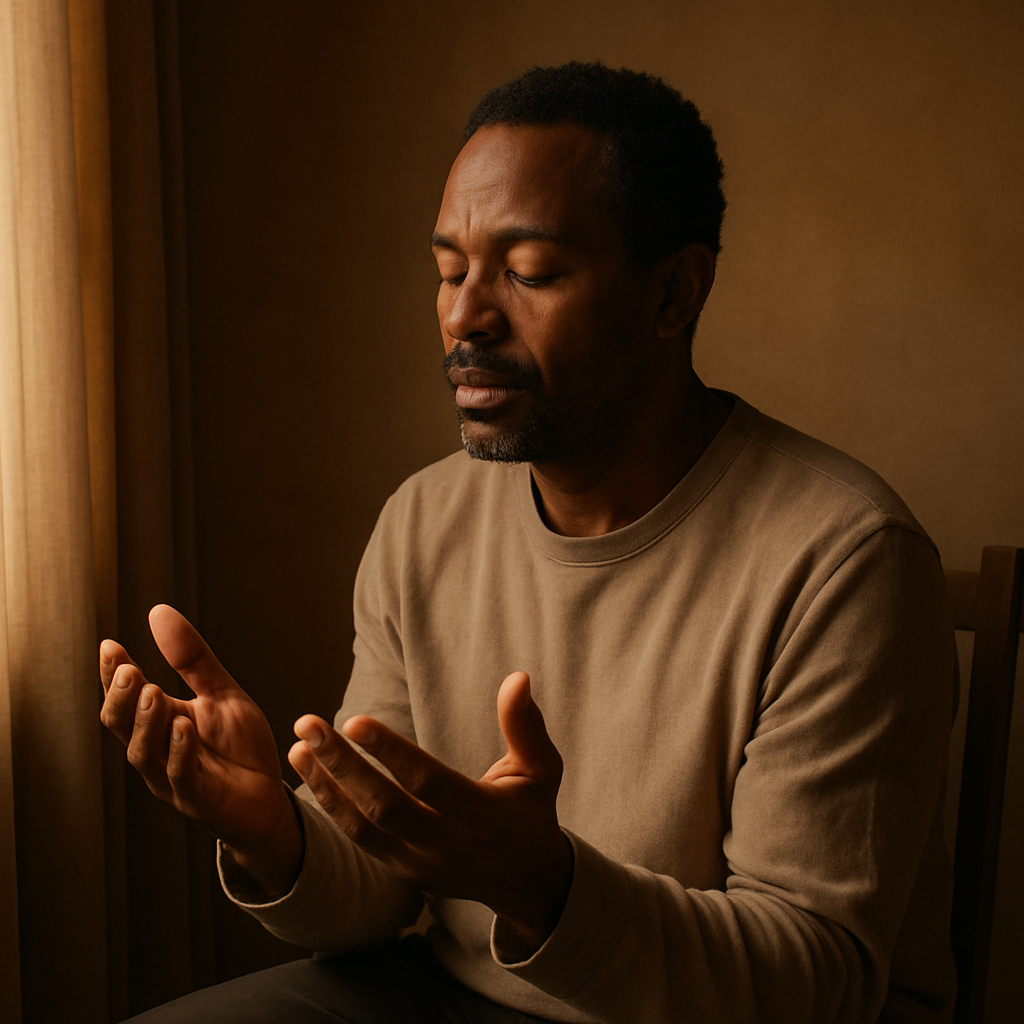
Hitbodeduth is spontaneous personal prayer practiced in the Breslov tradition, where you speak directly to God in your own words about anything on your heart. This means abandoning the structure of formal liturgy to engage in intimate, unscripted conversation with the Divine.
Rebbe Nachman of Breslov taught that every person should spend time daily speaking to God as they would to their closest friend. Unlike davening, which follows prescribed prayers, hitbodeduth requires no Hebrew knowledge, no particular posture, no specific time. You simply talk. You pour out your thoughts, fears, gratitudes, confusions, and longings in whatever language feels most natural.
This practice distinguishes itself from other Jewish prayer forms through its radical informality. While synagogue prayer connects us to community and tradition, hitbodeduth creates space for the personal relationship that exists between you and God alone. Rebbe Nachman insisted that this unmediated conversation was not only permissible but essential for spiritual growth.
Traditional Breslov practitioners spend 1+ hours daily in hitbodeduth, often outdoors or in private spaces where they can speak freely without self-consciousness. The content ranges from theological questions to daily frustrations to expressions of wonder. Nothing is too mundane or too elevated for this practice.
When hitbodeduth meets painting, the brush becomes your voice and the canvas your sacred meeting ground. The same spontaneous, unscripted quality that characterizes spoken hitbodeduth flows through mark-making, color choice, and visual expression. You paint not to create something beautiful but to maintain conversation with the Divine through visual language.
How Does Breslov Hitbodeduth Differ from Other Jewish Prayer Practices?
Breslov hitbodeduth differs from formal liturgical prayer in its emphasis on personal expression over communal structure. While traditional davening connects us to Jewish community through shared language and rhythm, hitbodeduth prioritizes the individual relationship with God.
| Feature | Breslov Hitbodeduth | Liturgical Prayer | Personal Prayer |
|---|---|---|---|
| Language | Your native language | Hebrew (primarily) | Mixed languages |
| Structure | Completely spontaneous | Fixed order and text | Semi-structured |
| Content | Whatever’s on your heart | Community needs and themes | Personal requests |
| Timing | Flexible daily practice | Set times (morning, afternoon, evening) | Occasional or crisis-driven |
| Setting | Private, often outdoors | Synagogue or designated space | Varies widely |
The distinction matters because hitbodeduth requires different skills than other prayer forms. You don’t memorize texts or learn melodies. Instead, you practice vulnerability, honesty, and sustained attention to your inner life. You learn to speak when you don’t know what to say, to continue when words feel inadequate.
This practice also differs from general meditation or contemplative prayer found in other traditions. Hitbodeduth maintains the Jewish understanding of God as personal and responsive. You’re not seeking to dissolve the self or achieve a particular state of consciousness. You’re deepening relationship through conversation.
When applied to Jewish art practice, hitbodeduth painting maintains this conversational quality. You’re not creating art as an offering or making something beautiful for God’s glory. You’re using visual language to continue the dialogue that begins in spoken prayer.
Why Does the Brush Become Your Voice in Hitbodeduth Painting?
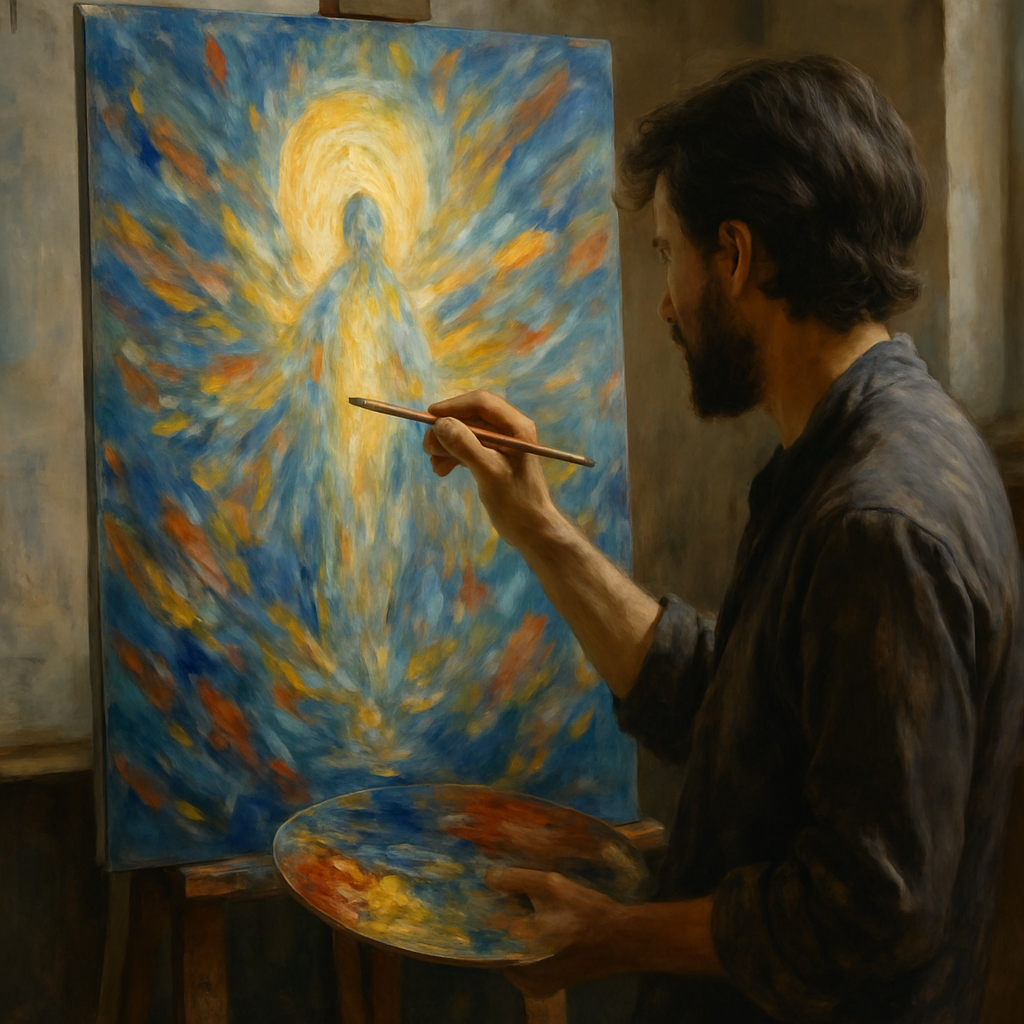
The brush becomes your voice in hitbodeduth painting because visual expression can carry what spoken language cannot reach. Mark-making functions as personal expression parallel to the unscripted words of traditional hitbodeduth, extending conversation into realms where verbal prayer falls short.
When you hold a brush with kavanah, directed intention, the physical act of painting mirrors the intimacy of personal prayer. Your hand moves across canvas the way your voice moves through spoken hitbodeduth, spontaneously, responsively, carrying both conscious intention and unconscious truth. The brush records not only what you think but what you feel, fear, hope, and cannot articulate.
Visual language operates below the threshold of rational thought where much of our spiritual life occurs. Colors emerge before you can explain why you chose them. Shapes appear that surprise you. Lines follow paths you didn’t plan. This spontaneous quality matches the unscripted nature of hitbodeduth itself, where authentic prayer often comes not from prepared thoughts but from whatever emerges in the moment of speaking.
Student reports from 18 months of experimental hitbodeduth painting sessions reveal that participants accessed emotional and spiritual content through the brush that remained unavailable in spoken prayer alone. The visual medium opened channels of expression that complemented rather than replaced their verbal hitbodeduth practice.
The brush also creates a record of your prayer in ways that spoken words cannot. You can return to a hitbodeduth painting weeks later and remember not just what you were thinking but how you were feeling, what you were wrestling with, how the Divine seemed to be responding. The canvas holds the conversation long after the session ends.
This visual form of prayer aligns with the Breslov understanding that hitbodeduth should include whatever helps you connect authentically with God. If words alone feel insufficient, if your spiritual life includes visual and kinesthetic dimensions, the brush becomes a natural extension of your prayer voice.
What Does a Hitbodeduth Painting Session Actually Look Like?
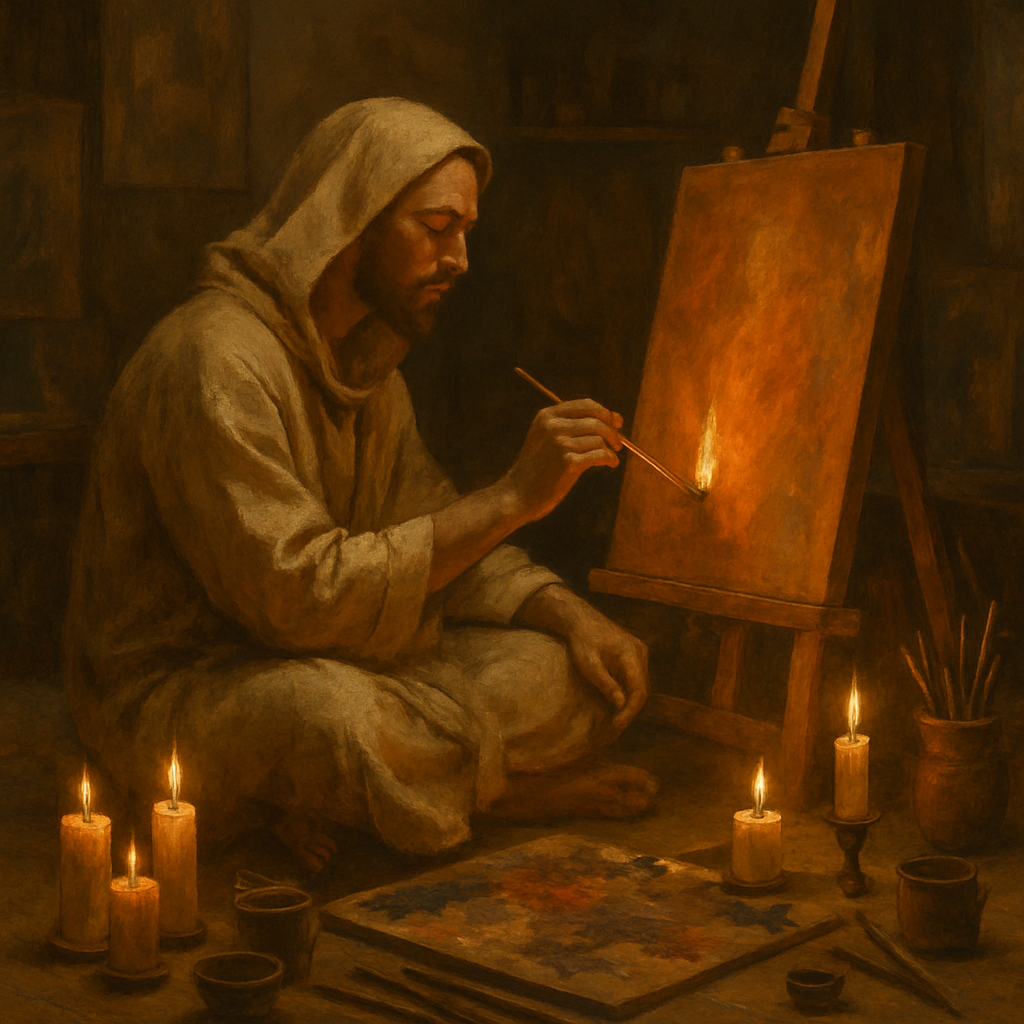
A hitbodeduth painting session follows specific ritual structure adapted from traditional hitbodeduth timing and practices. The 5-step process typically requires 20-45 minutes of uninterrupted time, matching the focused attention that makes spoken hitbodeduth effective.
Open with kavanah by setting your intention for sacred conversation. Speak aloud or silently acknowledge that this painting time is dedicated to dialogue with the Divine, not to creating art for display or personal satisfaction.
Begin with spontaneous mark-making before you know what you want to paint. Let your brush move across the canvas without predetermined outcome, allowing the first marks to emerge from whatever you’re carrying rather than from artistic planning.
Allow visual conversation to develop organically as you paint. Notice what colors call to you, what shapes want to emerge, how your energy shifts as the painting progresses, treating these impulses as part of your dialogue with God.
Continue painting while maintaining awareness of the sacred relationship. Let the work develop through the same unscripted responsiveness that characterizes spoken hitbodeduth, remaining open to surprise and change throughout the session.
Close with gratitude and acknowledgment of whatever transpired. Thank God for the time spent together and the opportunity to express yourself through visual language, regardless of whether the painting “succeeds” by artistic standards.
The session requires the same vulnerable honesty that makes spoken hitbodeduth effective. You cannot fake your way through visual prayer any more than you can fake your way through verbal prayer. The brush records your actual state, not your preferred self-presentation.
Unlike intuitive painting focused on personal expression or first painting session beginner techniques aimed at skill development, hitbodeduth painting maintains explicit awareness of sacred relationship throughout the creative process.
How Does Rebbe Nachman’s Teaching Apply to Painting Practice?
Rebbe Nachman’s principles apply directly to painting practice through four core teachings that transform art-making from personal expression into sacred conversation. These principles, extracted from Likutey Moharan and Sichos HaRan, provide the philosophical foundation for visual hitbodeduth.
Simplicity over sophistication in both prayer and painting. Rebbe Nachman taught that the most profound hitbodeduth often uses the simplest language, and the same applies to visual prayer, basic marks made with sincere intention carry more spiritual weight than technically advanced work created for impression.
Personal truth over universal themes in your visual conversation. Just as hitbodeduth focuses on your specific circumstances rather than general spiritual concepts, your painting should address what’s actually present in your life rather than what you think spiritual art should contain.
Conversation over performance in every brushstroke. Rebbe Nachman emphasized that hitbodeduth is dialogue, not monologue, and hitbodeduth painting maintains this interactive quality, you paint in response to something beyond yourself rather than to demonstrate your artistic capabilities.
Presence over outcome in both prayer and creative practice. Traditional hitbodeduth measures success by the sincerity of your attention, not by achieving particular emotional states, and hitbodeduth painting succeeds when you show up authentically, regardless of whether the resulting art pleases you.
These principles distinguish hitbodeduth painting from other forms of spiritual art that may emphasize beauty, skill, or transcendent experience as goals. Rebbe Nachman’s approach grounds the practice in relationship rather than achievement, conversation rather than creation.
The Breslov teaching that “there is no such thing as despair” also applies to painting practice. When your work feels unsuccessful by artistic standards, when you cannot access the spiritual state you hoped for, when the painting session feels flat or disconnected, the conversation continues. Rebbe Nachman taught that God receives whatever you bring, and this acceptance extends to whatever emerges on your canvas.
This approach aligns with why art heals through relationship rather than through producing beautiful objects. The healing happens in the showing up, the honest expression, the willingness to be seen by the Divine through your creative voice.
Frequently Asked Questions
Do I need to be Jewish to practice hitbodeduth painting?
Hitbodeduth painting welcomes anyone called to intimate visual dialogue with the Divine. While rooted in Breslov tradition, the practice of unscripted personal prayer through art transcends religious boundaries. Your sincere intention matters more than your background.
Can I practice hitbodeduth painting if I don’t believe in God?
Hitbodeduth painting can be adapted as dialogue with your highest self, creative source, or whatever you consider sacred. The practice emphasizes honest personal expression through visual language. Many practitioners begin with uncertainty about the Divine and let their painting practice inform their understanding.
How long should I practice hitbodeduth painting each day?
Traditional hitbodeduth involves 1+ hours daily, but hitbodeduth painting adapts to your life rhythm. Even 20 minutes of sincere visual conversation creates meaningful practice. Consistency matters more than duration, better to paint with intention for 15 minutes daily than sporadically for hours.
Leave a Reply